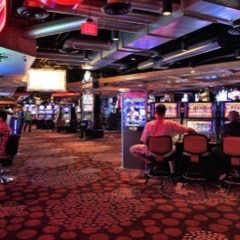
Why is it so hard to stop after one more spin, one more run or one more box? Part of the answer is a set of design techniques that slot machines and mobile games share, many of them based on decades-old psychology. None of them is secret, and knowing them makes it much easier to notice when a game is steering you. Here are the main ones.
Variable-ratio rewards
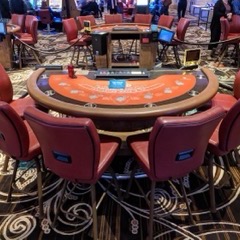
In the mid-twentieth century the psychologist B. F. Skinner studied how animals responded to different reward schedules in what became known as Skinner boxes. A reward after every press, or on a fixed schedule, produced steady behaviour that stopped quickly once rewards ended. A reward after an unpredictable number of presses, a variable-ratio schedule, produced fast, persistent responding that was very hard to extinguish. A slot machine is a variable-ratio schedule: any spin might pay.
Games use the same idea in loot drops, random crate contents, gacha pulls and rare critical hits. Even Happy Room's damage tally has a little of it: most runs score modestly, a few score spectacularly, and you never know which the next will be. That is part of why the release button is so satisfying, as we discuss in our Happy Room guide.

Near misses
Two jackpot symbols on the line and the third just above it: a near miss feels like almost winning, and research suggests it can encourage players to continue even though, in a random game, a near miss means nothing. Regulators have taken an interest. Nevada regulators restricted one form of programmed near miss on slot machines in the late 1980s, though near misses still occur naturally. Games use near misses too: a run that ends just short of a record, a loot box animation that shows a rare item rolling past before landing on a common one.
Losses disguised as wins
Modern video slots with many paylines can pay out less than you bet while still flashing lights and playing a winning tune. Researchers, including a 2010 study by Dixon and colleagues, named these "losses disguised as wins" and found that players often counted them as wins. Mobile games have their own version: a reward screen full of confetti that hands you a few coins after a match you lost.
The mobile and free-to-play toolkit
| Technique | In casinos | In games |
|---|---|---|
| Daily bonus | Free spins or chips for logging in | Daily login rewards and calendars |
| Streaks | Loyalty tiers and status points | Win streaks, play streaks, streak protection |
| Premium currency | Chips instead of cash | Gems or coins with odd bundle sizes that hide real prices |
| Time pressure | Limited-time promotions | Energy timers and countdown offers |
| Progress bars | Bonus meters | Battle passes and level tracks |
| Celebration effects | Lights and sounds on every win | Confetti, sound and slow-motion reveals |
Some of these are harmless ways to make a game feel rewarding. Others, especially premium currencies that make spending hard to track and timers that push quick purchases, are what critics call "dark patterns". The anthropologist Natasha Dow Schüll's book Addiction by Design (2012) describes how slot machine makers refined many of these techniques in Las Vegas, and much of what she describes can be recognised in mobile games.
How to spot them
- Convert currencies back to money. If you cannot easily tell what a purchase costs, that is deliberate.
- Notice the celebration. Lights and sounds do not mean you came out ahead.
- Ignore near misses. In a random game, almost winning is the same as losing.
- Set the stopping point first. Decide how long or how much before you start, not during.
Where to go next
The maths behind slot outcomes is in the physics and RNG behind slots and Plinko; the legal debate over randomised purchases is in loot boxes versus gambling; and for a reminder that a game can be compelling without any of these tricks, try the simple, honest loops of the best endless runners.