Press spin on a modern slot machine and the result is decided before the reels finish their first turn. Drop a chip on a Plinko board and the result is decided by pegs, gravity and luck. Online "Plinko" games look like the second but usually work like the first. This article explains both mechanisms, with the probability maths, and why they matter to anyone who has watched a ragdoll bounce down stairs in a physics game.
From mechanical reels to random numbers
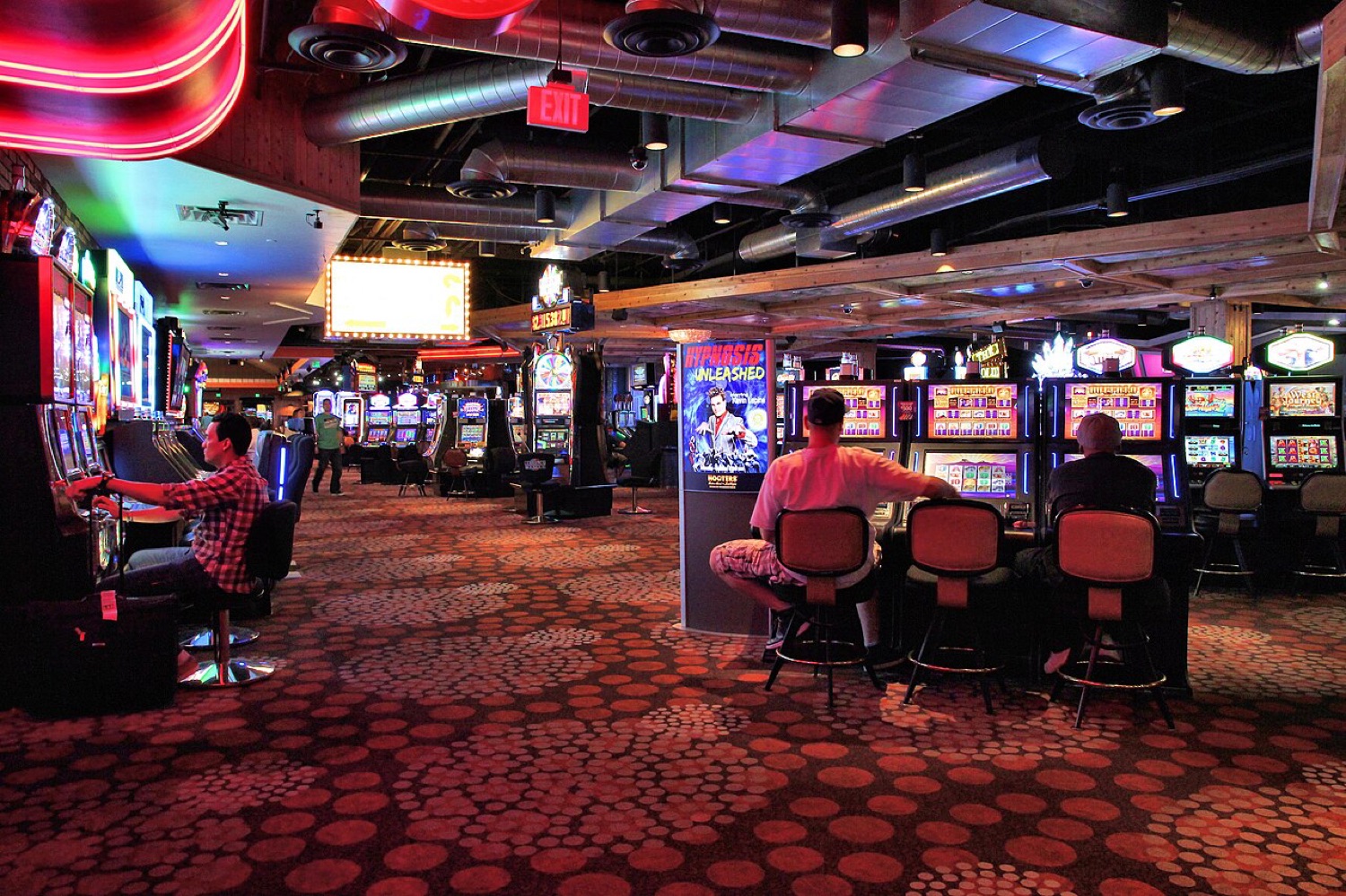
Early slot machines were mechanical: physical reels with a fixed number of symbols, spun and stopped by springs and brakes. With, say, twenty symbols on each of three reels, there were 8,000 possible combinations, which limited how big a jackpot could be. Electronic machines changed that. In the early 1980s, an inventor named Inge Telnaes patented the idea of a "virtual reel": the computer chooses a stop from a much larger list of virtual positions, many of which map to the same physical symbol. Blanks and low symbols can be given many virtual positions and the jackpot symbol only one. That made large jackpots possible, and it means the symbols you see no longer tell you the odds.
How the RNG works
A slot's random number generator is a pseudo-random algorithm that produces a constant stream of numbers, cycling continuously even when nobody is playing. When you press spin, the machine takes the current numbers and maps them to reel stops. The animation that follows is only a display of a result already chosen. Two consequences follow:
- No machine is "due". Each spin is independent. A machine that has not paid for hours is no more likely to pay now.
- Timing tricks do not work. Pressing a button faster or stopping the reels early does not change the outcome; it only changes when you see it.
Regulators require the generator and the game maths to be tested by independent laboratories. The game is designed to return a certain percentage of money wagered over a very long run, called return to player or RTP. Nevada, for example, sets a minimum of 75 percent for machines; most machines and online slots are set higher. A related setting, volatility, describes how the returns are spread: frequent small wins or rare big ones.
The Galton board and the bell curve
In the 1870s the scientist Francis Galton built a board on which beads fall through rows of pins into slots below, and described it in his 1889 book Natural Inheritance. At each pin a bead goes left or right with roughly equal chance. Very few beads go the same way at every pin, so few end up at the edges; most end up near the middle. Pile up enough beads and they form a bell curve.
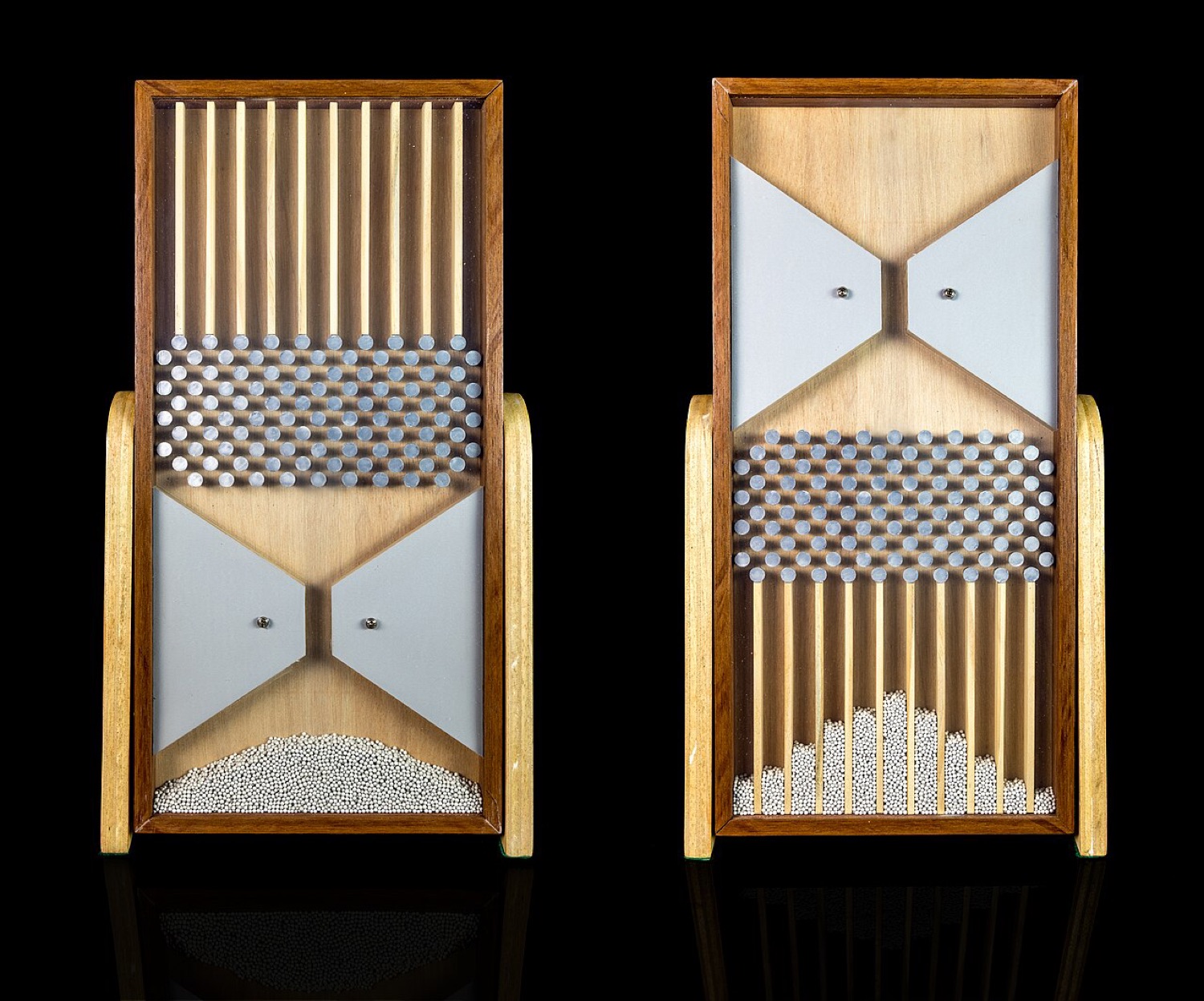
The maths is the binomial distribution. With 8 rows of pins, a bead makes 8 left-or-right choices, giving 256 equally likely paths. The number of paths that end in each slot is 1, 8, 28, 56, 70, 56, 28, 8, 1.
| Slot (from left) | Paths | Chance | Example multiplier |
|---|---|---|---|
| 1 or 9 (edges) | 1 each | 0.39% each | 5.6x |
| 2 or 8 | 8 each | 3.1% each | 2.1x |
| 3 or 7 | 28 each | 10.9% each | 1.1x |
| 4 or 6 | 56 each | 21.9% each | 1.0x |
| 5 (centre) | 70 | 27.3% | 0.5x |
The multipliers are illustrative, not taken from any particular game. With these values the expected return is about 0.99 of the stake: (2 × 1 × 5.6 + 2 × 8 × 2.1 + 2 × 28 × 1.1 + 2 × 56 × 1.0 + 70 × 0.5) ÷ 256 ≈ 0.99. That is how a Plinko-style game builds in its house edge. The big prizes are placed where the ball almost never lands, and the most likely slot pays less than the stake.
Television Plinko and pachinko
Plinko first appeared on The Price Is Right in 1983, with the biggest cash prize in the centre slot. A real board is not a perfect Galton board: chips spin, bounce over several pegs and can drift, which is why the result is unpredictable even to the contestant who drops it. Japan's pachinko machines take the idea further, with steel balls, pins and electronic features that trigger jackpot modes. Because cash gambling is restricted in Japan, players exchange balls for prizes, which are then sold for cash at a separate counter nearby, a long-tolerated arrangement.
Online Plinko: physics on screen, RNG underneath
Online casino Plinko games show a ball bouncing through pegs, but in most of them the outcome is not decided by a physics simulation. The game first generates a random result, often as a sequence of left and right choices, and then plays an animation of a path that matches it. That keeps the odds exactly as designed and makes the result verifiable, which crypto casinos advertise as "provably fair", explained in crash games and provably fair maths. A real physics simulation would be harder to certify, because tiny numerical differences between devices could change the result.
That is the opposite of a ragdoll game. In Happy Room or a dismount game, the physics really does decide the outcome, and the "randomness" is chaos from tiny differences in starting conditions, as our physics primer explains. If you have ever watched a body bounce down a staircase and land somewhere unexpected, you have seen a Galton board at work; see ragdoll physics games.